vrijdag, juli 03, 2015

From Zandvoort to Amsterdam City Beaches - Video HVP 7.8

Hi passengers ! 
Haarlem Video Pictures presents today this podcast produced in july 2008 with shots made on the beach of Zandvoort in the Netherlands, i added the song ''Moses'' performed by Coldplay giving a melancolic tempo to this holiday movie. 
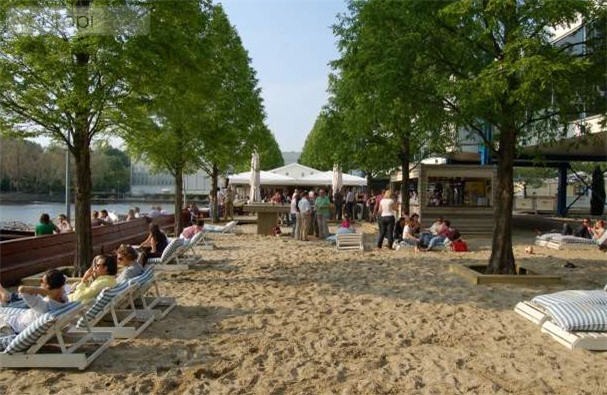
In 2015 Zandvoort is very busy during the summer, then for the ones who cannot access the beach, there is another destination in the heart of Amsterdam : The city beaches !  
Summer holidays in The Netherlands in 2015 :
Northern provinces 4 July - 17 August 
Central Holland 11 July - 23 August 
Southern provinces 18 July - 30 August
It is a huge trend in European cities: the city beach. After enjoying hectic urban life, these ‘beaches’ allow you to relax and enjoy without having to travel to the coast. We have found the best city beaches in Holland for you. 
The 4 best city beaches 
1. Amsterdam: Strandzuid 
Enjoy the sun the chic way! This luxury city beach offers 2000 square metres of enjoyment for those who love lounging, good cocktails and great food. Relax on a lounge chair or compete in a game of beach volleyball. Unfortunately you cannot swim at Strandzuid so this is the ultimate location for enjoying the sun! Address: Strandzuid. Europaplein 22, Amsterdam.
2. Amsterdam: Strand West 
The most relaxed city beach in Amsterdam. With its view of the IJ river and a relaxed atmosphere, this is the perfect city beach if you want to relax in care-free surroundings. This is where you will find hammocks and beanbags and an alternative audience consisting mainly of students. An excellent DJ mans the turntables for those who love to dance. Address: Strand West. Stavangerweg 900, Amsterdam.
3. Amsterdam: IJburg beach 
This is Amsterdam’s city beach for those who like swimming in natural water. A hippie-like mood that attracts young families and artistic Amsterdam locals. You will always find good music and an open fire here. Address: Strand IJburg. Muiderlaan 1001, Amsterdam. Hotel tip: Book a hotel in IJburg and Amsterdam from the other side. The small ferry takes you to the city in 10 minutes.
4. Utrecht: Strand Oog in Al 
City beach with covered seating area. Utrecht’s prime city beach is located at the northernmost tip of Oog in Al, where the Amsterdam Rhine Canal and Merwedekanaal join. Spend your day relaxing in the sun, enjoying some great food and drinks. Since it also has a covered seating area, you can even enjoy the beach when it’s raining. Address: Strand Oog in Al, Kanaalweg 196, Utrecht Hotel tip: The NH hotel boasts a wonderful view of Utrecht and allows you to cycle to Oog in Al. Book your room now starting at €70.32.
 Amsterdam: Strandzuid 

zondag, april 27, 2014

Festa Real nos Paises Baixos - Video ''O Rei Lariloff está doente !'' - HVP 5.8


Ola Passengers !
Sony Magellan apresenta esta noite este clipe realizado com imagens feitas durante a exibicáo aos pais e profesores de uma peca de teatro escolar "O Rei Lariloff está doente !" jogada por alunos em Haarlem.
Em 30 de Maio 2008, a escola de Sint Bernardus ensinava teatro aos mais pequenos e foi com alegria que filmei estes meninos e meninas cheios de vontade de bem fazer o seu papel na frente de umas 80 pessoas. 
Seis anos depois uma musica foi incorporada neste filme para cobrir os dialogos que eram em Neerlandes e quase inaudiveis dada a má qualidade do som, espero ter dado assim ao documento esse novo estatuto de clipe com musica e convidar os amigos internautas lusofonos a descobrir a familia Real de Holanda a traves desta reportagem numerica produzida em Web 2.0
Família Real da Holanda
A Holanda é uma monarquia jovem. O Reino dos Países Baixos foi estabelecido em 1815, com o Rei Guilherme I como o primeiro monarca. O primeiro rei da Holanda era da Casa de Orange-Nassau. A origem do lema da Holanda, "Je maintiendrai" ("eu manterei"), das cores da bandeira e da cor nacional laranja estão todas na Casa de Orange-Nassau. 
A Princesa Beatrix foi a monarca reinante por mais de 30 anos. Em 2013, seu filho mais velho, Willem-Alexander, a sucedeu no trono. A monarca tem poderes limitados. A rainha tem imunidade, mas o poder real está nos ministros. A monarca é neutra e não se pronuncia sobre temas políticos...
Celebre o Dia do Rei 
Em 27 de abril, toda a Holanda se veste de laranja quando os holandeses celebram o Dia do Rei. Durante esse feriado nacional, se celebram eventos e celebrações por todo o país... 

zondag, december 01, 2013

BedrijfsUitje Haarlem 2013 - Nacht beelden van Klokhuisplein - Video HVP 10.7

Oi pasagiers !
Prosuming vanavond beelden van Klokhuisplein. De camera loopt door Ambassador City Hotel, Stempels Café en voor een leuke uitje door de Haarlemse nacht in de straten van een van de oudste stad van Nederland. 
Nacht beelden van Klokhuisplein - is een video gemaakt door Jean Gregorio in Oktober 20, 2007 en geuploaded op YouTube in April 17, 2011. Drie jaren later wat zijn de evenementen in Haarlem voor een uitje in 2013.
BedrijfsUitje Haarlem 2013
Haarlem is met de sfeervolle Grote Markt en de unieke Haarlemse Hofjes er omheen, de stad bij uitstek voor uw bedrijfsuitje. Haarlem heeft een roerige geschiedenis, het prachtige Spaarne en bijzondere bezienswaardigheden die u gezien moet hebben tijdens bijvoorbeld een bedrijfsuitje. 
Bedrijfsuitje Haarlem: op uw wensen en budget aangepast Ervaring leert dat het niet eenvoudig is om een bedrijfsuitje te organiseren. Wij wonen en werken al jaren in Haarlem en weten dus precies waar u moet zijn. We helpen u graag bij het omzetten van uw ideeën naar een geslaagd bedrijfsuitje op maat in Haarlem. 
Bel met onze medewerkers: 023 - 557 57 57. 
Mannen komen van MarsManen komen van Mars 
U wilt samen een uitje, maar graag wel op uw eigen planeetje? We geven u nu de kans om vooraf te kiezen voor typische mannendingen of echte vrouwen power! 
Bijvoorbeeld een pokerworkshop voor de mannen en een smakelijke bonbonworkshop voor de dames. Ziet u het al voor u: de mannen wagen zich aan het grote gokken, terwijl de vrouwen eindelijk eens de tijd hebben om heerlijk te stoeien met dit vrouwvriendelijke goedje!. 
Of toch: - Bierproeven en naar de beautysalon - Een stadionrondleiding & workshop salsadansen - Karten en sieraden maken - Workshop flirten en paaldansworkshop - Wallenrondleiding en Wijnproeverij En zo kunnen we nog wel even door gaan. 
Alle workshops en activiteiten zijn met elkaar te combineren. Zo kunt u uw eigen uitje samenstellen! Uiteraard is het niet verboden om ook als vrouw de fijne mannelijke kneepjes te leren. Of uw creativiteit te laten zien als man. Maar of Mars u accepteert…tsjah... het is en blijft een Venus gok! Natuurlijk daalt u weer af van uw eigen planeet en komt u met beide voetjes terug op moeder Aarde. Inclusief: - Workshop - Professionele begeleiding - Eén consumptie p.p. Wanneer u bereid bent om voor het minimale aantal te betalen, kunt u ook met minder personen boeken.

Mannen komen van Mars

Prijs details Klik hier voor meer info
Aantal personen vanaf 20 personen
Tijdsduur  4 uur

zaterdag, april 23, 2011

Henriette Bosmanstraat, Haarlem (April 13, 2008) - HVP 4.11


Oi passagiers !
In April 13, 2008 mijn camera was in een speltuin met kinderen aan voetbal spelen op het plein van Henriette Bosmanstraat. De video was geuploaded op YouTube in 23 April 2011 door Jean Gregorio.

Toneelschuur & Filmschuur Haarlem - Visit the capital of Province North Holland - HVP 4.11


Hi Passengers!

Haarlem.EN presents this film made in March 2008 but remixed tonight with sound from Youtube to make knowledge with the great theater in the city : Toneelschuur & Filmschuur.
You may find them in the centrum, walking along Klokhuisplein and following the direction of the train station. 
Then after watching a film or a theater show you will have a lot of time to travel into the city along the river Spaarne and discover the greatness of the capital of North Holland and this Province located in The West-Netherlands.
Visit Haarlem - The capital of Province North Holland

Understand - Haarlem is the center of a flower-growing district and the export point for flower bulbs. Many people commute to nearby Amsterdam.

History - The first recordings of the name 'Haarlem' date from the tenth century. Located on a much used north/south connection route, the city became the seat of the Counts of Holland. In 1245 the city was granted city rights by Count William II of Holland. Due to heroic acts of knights from Haarlem during the fifth crusade and their contributions in the siege of Damiate in 1217, Haarlem was granted permission to show a cross and a sword in the city's coat of arms.

Get in - Haarlem is connected on the main train line between Amsterdam and The Hague. It takes about 15 minutes to travel from Amsterdam by train. If you have – or rent – a bike, it takes an average cyclist around an hour to cycle from the centre of Amsterdam, a fairly relaxing ride on typically level terrain.

If you're taking the train from Schiphol Airport, there is no direct service so you will have to change trains in Amsterdam. A good alternative is to use the big red bus #300, called the Zuidtangent, which runs every 10-15 minutes between Schiphol and Haarlem Central Station. 
There are a fair amount of stops along the way, but for a lot of the journey there is no traffic because the bus has its own dedicated lane. 
The trip is approximately 30-40 minutes. You will need to carry your luggage on the bus with you. The fare is settled with a strippenkaart, a ticket that you feed into a punch machine when you board the bus. 
The strippenkaart costs just a few Euros, and is available from the news shop on your left just before you exit the Schiphol terminal out into the bus pickup area. There are many bus stops clustered in this area -- the one for the Zuidtangent is across the street, and is indicated on the sign at the bus stop.

Get around - Haarlem is best walked on foot: it's about a 15 minute walk from the train station to the city center. If you don't want to walk there are buses taking you from the station to the city center and back every few minutes.

See

  • Teylers' Museum 
  • Frans Hals Museum The only good memory of the painter Toulouse-Lautrec about the Netherlands.
  • Corrie ten Boom museum  has free guided tours (in English and Dutch) of the ten Boom house. Tourists can stand in the "hiding place" where Jews were hidden from the Nazis, and see the 'all-clear' sign used to indicate when it was safe for refugees and resistance workers to come and go. Reminiscent of the Anne Frank house in Amsterdam, although where in the Anne Frank House they have had to remove all furniture due to the volume of visitors, the Ten Boom museum is still furnished as a house, making it much easier for visitors to see what it was like for those that lived there during the war. Truly one of Holland's lesser-known gems.

Do - Visit the Teylers Museum which is the oldest public museum in the Netherlands. The museum hosts a collection of fossils (among which the famous Haarlem specimen of Archaeopteryx), minerals, historical scientific instruments and works of art, exhibited in a 19th century manner.

The Patronaat is Haarlem's largest venue for live music. Their fridays and saturdays are dance nights and generally well visited. 

On summer days, hang out in the sun on Haarlem's 'Grote Markt' (near the Grote Kerk) after a long day of shopping or go sightseeing in Haarlem's ancient city centre.

Buy - Haarlem is a popular city for shopping in the region. It has been voted many times as Best Shopping City in the Netherlands and boasts a very diverse range of shops. The Grote Houtstraat, the main shopping street, has most of the obvious shops. The surrounding streets (Kleine Houtstraat and Gierstraat) house smaller shops, where you can browse or buy everything from high end bicycles to teapots.

Shops are open from Monday to Saturday. Opening times usually are from 9am to 5pm, except on Monday's when shops open at 1pm. Many shops in the city center also open every first Sunday of the month and usually shops may be open from 7pm to 9pm on thursdays as well, the so-called "avondverkoop" (Eng. "evening sale" although no special discounts will be given).

Eat The inner city hosts large a variety of restaurants and eat-cafe's. Worth mentioning are

  • De Lachende Javaan, Frankestraat 27. Indonesian
  • Restaurant het Pakhuis, Gravinnesteeg 9. All menu items cost 10 euro or less.
  • Restaurant/Brasserie Stempels; Klokhuisplein 9
  • Restaurant La Plume; Lange Veerstraat 1
  • Eet, Lunch en Biercafe Bruxelles; Lange Wijngaardstraat 16
  • Grand Cafe Nobel; Spaarne 36
  • Brasserie/Restaurant De Nieuwe Karmeliet; Spekstraat 6
  • Restaurant Specktakel; Spekstraat 4
  • Restaurant Mooi Java; Kruisweg 32
  • Grill Restaurant De Kale Pater; Schagchelstraat 19
  • Lucas & Lucas; Lange Veerstraat 51

Drink - Beerbrewing has been a very important industry for Haarlem. The historical Haarlem's beer, recreated in 1995 is Jopenbier or Jopen.

Sleep - The Haarlem hostel (Jan Gijzenpad 3) is located in the north west corner of the city. It's by far the cheapest place to stay, but quite a few miles away from the city center.

woensdag, april 13, 2011

Systéme éducatif néerlandais - Écoles Primaires en Haarlem - HVP 4.11


Salut passengers!
Haarlem.FR présente ce soir ce clip réalisé a partir d'images tournées dans un étalissement scolaire de la rue Johan wagenaarring en Haarlem le 18 mars 2008 mais reédité le 13 avril 2011 avec une musique de fond dont le titre C.P.U. est composée par le groupe Danois Aalborg Fantasy...
Sint Bernardus est le nom de cette école primaire et maternelle de confession catholique qui accueille des éléves dés l'áge de trois ans et qui accompagne leur éducation jusqu'á l'áge de dix - onze ans. 
Illustration : Jan Steen (Leyde 1626 + 1679) - Fête de Saint-Nicolas (Amsterdam, Rijksmuseum)
Découvrez maintenant au travers du reportage numérique suivant quelques informations sur le systéme scolaire mis en place aux Pays Bas...
Systéme éducatif Néerlandais 
Le système éducatif néerlandais – Quelles innovations ? Quelle gestion des lycées ?
Egalité des chances, intégration, qualité de l’enseignement sont, depuis près de trente ans, les objectifs majeurs des programmes éducatifs des autorités nationales néerlandaises. 
Forte immigration, différences sociales, élèves difficiles, retards scolaires sont autant de difficultés que le système éducatif a voulu surmonter; ainsi, dès les années 80, des recherches sont entreprises, en collaboration étroite avec les écoles. Des solutions originales et innovantes pour l’époque, ont été trouvées parmi lesquelles, l’autonomie des écoles, le service d’orientation… 
Aujourd’hui, ce pays de 17 millions d’habitants dispose de 700 établissements du secondaire, très diversifiés; le chômage des 15-24 ans, malgré la crise, y est resté limité à 8,5% tandis qu’il atteint plus de 20% pour l’ensemble de l’Europe. Il n’est donc pas surprenant de constater que le système éducatif néerlandais soit devenu une référence pour les pays d’Europe qui cherchent aussi à moderniser le leur.
Prise de conscience
Dès le début du XX ème siècle, la stratégie éducative du gouvernement néerlandais a pris en compte les besoins des enfants en retard scolaire. La montée de l’immigration des années soixante, a encore accentué cette attitude. La pression sociale, les difficultés éducatives toujours plus complexes, les limites budgétaires, ont poussé le gouvernement à redéfinir ses stratégies. Il s’est alors engagé dans une politique le menant peu à peu vers une totale autonomie de chaque établissement, qu’il soit public ou privé. 
C’est ainsi qu’à partir des années 2000, des écoles ont accepté de s’inscrire dans un « réseau de responsabilisation », l’EOP (Educational Opportunity Policy). Le résultat est convaincant puisque l’échec scolaire atteint moins de 10 %. En Europe, dès les années 80, ce concept novateur, laissant plus d’autonomie aux écoles, fait des émules, une différence est cependant apportée quant à l’importance de la responsabilisation laissée aux écoles. 
Le système éducatif est orienté en fonction des besoins et du passif des élèves . 
«Dans les pays où les établissements d’enseignement jouissent d’une grande autonomie dans le choix des programmes et des modes d’évaluation, les élèves ont tendance à obtenir de meilleurs résultats » Pisa à la Loupe N° 9. 
Les propositions éducatives aux Pays-Bas sont particulièrement diversifiées. Tout groupe sérieux peut fonder son école privée à condition d’accueillir un minimum d’élèves. Ces écoles répondent alors à un courant éducatif ou à un niveau d’éducation particulier. Aujourd’hui 70 % des écoles sont privées, d’obédience catholique, protestante, musulmane, hindoue, Juive ou laïque … tandis que l’Ecole publique est, laïque. Qu’elle soit publique ou privée elle bénéficie du même soutien financier. Le ministère de l’Education, de la Culture et des Sciences en association avec les pouvoirs locaux est responsable des politiques relatives à l’éducation. Un programme de base, national, est établi par négociation avec toutes les écoles du secondaire.
Constituée en fondation, l’école est responsabilisée. 
Elle développe sa propre identité, ses objectifs et les moyens de les atteindre ; certaines créent des méthodes pédagogiques originales (Montessori, Dalton…). Ainsi autant d’écoles proposées sont autant d’offres adaptées à autant de profils d’élèves. Les parents sont libres de choisir l’établissement qui leur paraît le mieux adapté à leur enfant. L’Etat, bien entendu, garde des droits comme celui d’établir des règles concernant la qualification des enseignants, leur rémunération, la construction des bâtiments scolaires… 
Un contrôle strict des écoles, les évaluations diffusées sur le net. Les établissements publics sont soumis à la législation publique qui est gérée par le conseil municipal. Les privés sont soumis à la législation privée. Chaque année des inspecteurs, contrôlent les établissements. Toute école doit rendre des comptes. Elle est jugée sur la gestion de son budget et sur ses performances. Les résultats évalués selon des critères précis sont diffusés sur internet. L’aide financière est accordée au prorata du nombre d’élèves accueillis et de leurs résultats...

maandag, oktober 25, 2010

Studio New Look - Hair care & Visagiste in Essenstraat - HVP 10.10


Oi passengers !
Studio New Look is al weer jaren een toonaangevend opleidingsinstituut voor visagie, grime en hairstyling. Het is opgericht door Miranda van Altena die zelf na jarenlange werkervaring in Parijs, Italie en Nederland een eigen opleidingsinstituut in Haarlem opent.
Miranda heeft de nodige werkervaring en heeft met grote ontwerpers en modebladen gewerkt. (Jean Louis Scherrer, Jean-Paul Gaultier, Marie-Claire, Elle, Viva etc.).
Studio New Look, School voor visagie, grimeren en hairstyling 
Studio New look heeft een professioneel team van leraressen die ook nog werkzaam zijn in het vakgebied. Zij kunnen daarom de leerlingen altijd van de laatste trends op de hoogte brengen en veel vakkennis overdragen.

Het team van Studio New Look staat voor een modebewuste en gedegen visagisten en grimeurs opleiding waar je veel leert en vooral veel praktijkgerichte dingen doet.

Kinderverjaardagen

Modellenparty's van 9 tot 18 jaar
Duur: 2,5 a 3 uur
Een dagje met je vriendinnen een make-up les volgen en dan in de praktijk brengen. Er mooi uit zien met de mooiste kleuren make-up. Daarna kan je als je ouders het goed vinden een fotograaf boeken die jullie als model op de foto zet en natuurlijk ook met zijn allen.
Bij binnenkomst krijg je eerst iets lekkers te drinken en eten, waarna we beginnen met een make-up les door een bekende visagiste. Zij legt jullie uit hoe je er met weinig make-up mooier uit kan zien. Daarna is het aan jullie om dit in de praktijk te brengen. Een andere mogelijkheid is jezelf op te laten maken door visagisten. Als je klaar bent staat de fotograaf klaar om jullie als echt model op de foto te zetten. Allemaal om de beurt en als groep krijg je ook een paar leuke foto's.
Alle foto's worden op cd gebrand en zijn voor de jarige. Zij kan ze weer naar iedereen toesturen die erbij was.
Grimeer party's van 6 tot 12 jaar
Duur: 2 uur - Voor jongens en meisjes bestaat er ook een grimeer partijtje. Alles gaat zoals hierboven behalve wordt je met grimeren niet mooier maar enger met wonden of stoer als kapitein, romantisch als prinsesje. Je mag na de les lekker zelf kliederen en schilderen onder begeleiding van een grimeurs. Natuurlijk is hier ook weer eten en drinken aanwezig.

zaterdag, februari 13, 2010

Haarlem seen from Daegu (South Korea) - The Project Gutenberg eBook


Hi Passengers !

Haarlem.EN presents tonight this podcast made by Jessica Fisher, a girl friend from Daegu (South Korea). It shows some of the history of Haarlem, Nederlands, one of the most beautiful cities in the world.  
Thank you for this podcast over Haarlem... Let's discover now through this numeric report the works of Rembrandt by an eBook project called Gutenberg.

The Project Gutenberg eBook, Rembrandt and His Works, by John Burnet

This eBook is for the use of anyone anywhere at no cost and with
almost no restrictions whatsoever.  You may copy it, give it away or
re-use it under the terms of the Project Gutenberg License included
with this eBook or online at www.gutenberg.org 
Title: Rembrandt and His Works
Comprising a Short Account of His Life; with a Critical Examination into His Principles and Practice of Design, Light, Shade, and Colour. Illustrated by Examples from the Etchings of Rembrandt.
Author: John Burnet
Release Date: September 20, 2007 [eBook #22690]
Language: English
Character set encoding: ISO-8859-1 ***START OF THE PROJECT GUTENBERG EBOOK REMBRANDT AND HIS WORKS***

E-text prepared by Carl Hudkins, Chrome, David Garcia,
and the Project Gutenberg Online Distributed Proofreading Team
(http://www.pgdp.net)

maandag, januari 25, 2010

Flying migrators over Haarlem - Bird migration - SMI 1.10


Hi Passengers !

Harlem.EN presents tonight this podcast about bird migration phenomenoms seen today in the skyline of Haarlem between 1.30 pm (beggining of the observation) and 5.30 (end of my observation). They have been thousands of flying migators coming from the west (the ocean) and going to the east (Germany).

They have flyed at a maximum of 500 meters above the ground due to an heavy weather full of clouds, snow is covering again the Netherlands since Saturday night and those birds must have certainly problems to migrate with this weather in the middle of January. I lived in Haarlem since 2001 and i have never seen that during the past Januaries in the North Holland skyline...
  • My questions are : Where they are coming from ? 
  • Where they are going and why now ? 
Feel free to let your answer in the ''BLABLA'' section in the endpost of this message !
I will be pleased to share some informations about this strange bird migration in the Dutch sky today (January 25/1/2010) with this animation made to understand what's happening upon our blue dot ?
Bird migration
is the regular seasonal journey undertaken by many species of birds. Bird movements include those made in response to changes in food availability, habitat or weather. These however are usually irregular or in only one direction and are termed variously as nomadism, invasions, dispersal or irruptions. Migration is marked by its annual seasonality. In contrast, birds that are non-migratory are said to be resident or sedentary.

Historical views

The earliest recorded observations of bird migration were 3000 years ago, as noted by Hesiod, Homer, Herodotus, Aristotle and others. The Bible also notes migrations, as in the Book of Job (39:26), where the inquiry is made: "Doth the hawk fly by Thy wisdom and stretch her wings toward the south?" The author of Jeremiah (8:7) wrote: "The stork in the heavens knoweth her appointed time; and the turtledove, and the crane, and the swallow, observe the time of their coming."
Aristotle noted that cranes traveled from the steppes of Scythia to marshes at the headwaters of the Nile. Pliny the Elder, in his Historia Naturalis, repeats Aristotle's observations. Aristotle however suggested that swallows and other birds hibernated. This belief persisted as late as 1878, when Elliott Coues listed the titles of no less than 182 papers dealing with the hibernation of swallows. It was not until early in the nineteenth century that migration as an explanation for the winter disappearance of birds from northern climes was accepted.

The discovery in Germany of white storks embedded with African arrows provided early clues on migration. One of the oldest of these Pfeilstorch specimens was found in 1822 near the German village of Klütz, in the state of Mecklenburg-Vorpommern.

Threats and conservation

Human activities have threatened many migratory bird species.The distances involved in bird migration mean that they often cross political boundaries of countries and conservation measures require international cooperation. Several international treaties have been signed to protect migratory species including the Migratory Bird Treaty Act of 1918 of the US and the African-Eurasian Migratory Waterbird Agreement.

The concentration of birds during migration can put species at risk. Some spectacular migrants have already gone extinct, the most notable being the Passenger Pigeon (Ectopistes migratorius). During migration the flocks were a mile (1.6 km) wide and 300 miles (500 km) long, taking several days to pass and containing up to a billion birds.
Other significant areas include stop-over sites between the wintering and breeding territories. A capture-recapture study of passerine migrants with high fidelity for breeding and wintering sites did not show similar strict association with stop-over sites.
Hunting along the migratory route can also take a heavy toll. The populations of Siberian Cranes that wintered in India declined due to hunting along the route, particularly in Afghanistan and Central Asia. Birds were last seen in their favourite wintering grounds in Keoladeo National Park in 2002.

Structures such as power lines, wind farms and offshore oil-rigs have also been known to affect migratory birds. Habitat destruction by land use changes is however the biggest threat and shallow wetlands which are stopover and wintering sites for migratory birds are particularly threatened by draining and reclamation for human use.

maandag, juli 07, 2008

Een korte geschiedenis van Connexxion - Haarlem naar Zandvoort - HVP 7.8


Oi passengers!
Connexxion is de rechtstreekse voortzetting van streekvervoerbedrijven waarvan enkelen al in 1881 begonnen. Met rechtstreeks bedoelen we dat vervoer, personeel, gebouwen, materieel en met name de N.V.'s door interne beslissingen Connexxion werden. De N.V. Noord-Zuid Hollandse Stoomtramweg Maatschappij (`NZH') bijvoorbeeld, stoomde vanaf 1881 tussen Haarlem en Leiden. En diezelfde N.V. NZH heet nu Connexxion Openbaar Vervoer N.V.!

Buurtvervoer

Na de aanleg van het basisspoornet (1839-1870) ontstond behoefte aan 'buurtvervoer'. Aanpassing van de Spoorwet bracht vanaf 1878 de interlokale tram. Zakenlieden en belanghebbenden investeerden hierin en waar de stoomtram kwam, verdween de aloude diligencedienst. Rond 1900 startte op Amsterdam-Haarlem-Zandvoort het eerste elektrische trambedrijf. Dit kreeg landelijke navolging. In ruil voor aandelen staken de Spoorwegen geld in interlokale trambedrijven. Het spoor had nu grip op het tramvervoer van en naar hun spoorstations en de trambedrijven hadden geld voor uitbreidingen en elektrificatie. De NZH kreeg in 1909 van de Spoorwegen opdracht om naburige nieuw aangekochte trambedrijven te elektrificeren en groeide flink.

Autobus

De Eerste Wereldoorlog leidde tot prijsstijgingen en inkomstendaling. De toch al noodlijdende trambedrijven kregen overheidssubsidie. Nadien kreeg de tram flinke concurrentie van particuliere busdiensten, die overal begonnen met hun 'wilde' vervoersactiviteiten. Provinciale busvergunningen ingaande 1926 brachten hierin nauwelijks verbetering. Pas met de Wet Personenvervoer ging het vanaf 1939 beter. De rijksoverheid gaf alleen bedrijven een streekvervoervergunning als ze groot genoeg waren. Fusies en samenwerkingsverbanden waren het gevolg. Het lot van de interlokale tram was toen al beslecht; de overheid had de subsidie vier jaar eerder gestaakt. De meeste trambedrijven stapten helemaal over op autobusexploitatie.
De Tweede Wereldoorlog en de brandstofschaarste werkten levensverlengend voor de streektram. Veel busvergunningen van vooral particulieren werden ingetrokken en de bezetter vorderde hun bussen. Gedesillusioneerd verkochten velen hun busbedrijf aan het NS-concern, dat flink groeide. NS kreeg met dit aankoopbeleid grip op het concurrerende busvervoer. Na de oorlog was het aantal busbedrijven drastisch verminderd, maar NS bleef haar aankoopbeleid volgen. De jaren vijftig waren succesvol, nadien liep het vervoer terug door stijgende welvaart en groeiend autogebruik. In 1961 sloot de NZH haar laatste tramlijn.

Schaalvergroting

Vanaf 1970 kreeg het verlieslatende streekvervoer rijkssubsidie. De overheid betaalde en bepaalde voortaan. Gezamenlijke materieelinkoop binnen het NS-concern van gele standaardstreekbussen werkte kostenbesparend. Schaalvergroting was het devies in het streekvervoer en overal volgden fusies. De NZH fuseerde in 1971 met de NACO (boven de lijn Purmerend-Haarlem), maar behield zijn naam. De nationale strippenkaart verving in 1980 de regionale buskaartjes. In 1982 stootte NS haar aandelen streekvervoer af en ontstond een aparte busholding, de latere VSN-groep, thans Connexxion Holding. Die holding 'bezat' in de jaren tachtig al bijna alle streekvervoerbedrijven.

Openbare aanbesteding

De overheid wilde eind jaren tachtig nieuwe zakelijkheid in het openbaar vervoer om kosten te besparen. Geheel in het tijdsbeeld volgden fusies en reorganisaties in het streekvervoer elkaar in steeds hoger tempo op. De overheid wilde openbare aanbesteding invoeren en het streekvervoer wilde hiervoor klaar zijn. Het werd de aanzet tot Connexxion, dat in 1999 ontstond uit NZH, Midnet, ZWN en Oostnet. Met de Wet personenvervoer 2000 kwam er opnieuw regionale vergunningverlening, nu op basis van openbare aanbesteding. Connexxion heeft zich sinds haar oprichting ontwikkeld tot een uiterst succesvolle speler op de personenvervoersmarkt. Zij exploiteert busdiensten, een tramlijn, omvangrijk taxivervoer, bootverbindingen en spoorverbindingen.

Innovatie

Connexxion en haar voorgangers zouden de respectabele leeftijd van 125 jaar niet hebben bereikt, als zij niet hadden kunnen steunen op de creativiteit van vele generaties 'ondernemers'. Zonder voortdurende aandacht voor innovatie zou het personenvervoer niet de huidige vorm, omvang en organisatie hebben. Het gaat daarbij niet alleen om de toepassing van telkens nieuwe technische concepten, maar vooral ook het initiëren van ontwikkelingen op het gebied van mobiliteit, marketing, sociaal beleid, veiligheid en financiering. Tienduizenden mensen hebben elk op hun vakgebied die ontwikkelingen mogelijk gemaakt. De huidige en toekomstige generaties zien zich geplaatst voor de uitdaging om dat werk met evenveel succes voort te zetten.
Bron : Een korte geschiedenis van Connexxion

dinsdag, juni 10, 2008

Bike trip in Grote Markt - Visiting Vleeshal building - HVP 6.8


http://www.artificeimages.com/gbc/images/cid_aj1894_b.jpgHi Passengers!

Haarlem Bike Views presents tonight these pictures made by HVPSM 2.0 in June 10, 2008 during a trip in the centrum-city to visit the Vleeshal Buiding on the big market with a friend from Mali, Hamadou...
Grote Markt: Vleeshal
This is certainly the most elegant building of the Grote Markt. The Haarlem town authorities wanted a rich decorated meat market, a real prestige building and that is what the town architect Lieven de Key (one of the many Flemish immigrants) provided in 1604 by using much natural stone in combination with bricks.
The style of the Vleeshal is described by some as "Hollands Renaissance" because of the many ornaments; "manierist" style is also used.

Regulations inside the Vleeshal were very strict: no slaughtering, no walking around, no playing and, very understandable, dogs were strictly prohibited. The rent for the butcher was high: 30 florins per year.

The Vleeshal as well as the Verweyhal are now an annexe of the Frans Hals museum under the name "De Hallen". On the time of my visit to Haarlem, I was lucky that the temporary exhibition was on Isaac Israel a very good Dutch impressionist. The theme of the exhibition was "Israels on the beach". This exhibition stops already on 19/08/2007. I have joined some photos.
Next exhibition from 01.09.2007 to 25.11.2007 will show works from 15 young artists from Europe and the USA with the theme "The present order is the disorder of the future".

vrijdag, mei 02, 2008

Toneelstuk Sint Bernardusschool - De Koning Lariloff is ziek ! (Einde stuk Live) HVP 5.8


Oi passengers !
Sony Magellan presenteert vanavond deze beelden over een toneelstuk in Sint Bernardusschool .
Kijken nu de einde stuk van "De Koning Lariloff is ziek !" gepubliceerde om te herineren veel kinderen die hebben, zes jaren geleden, gegeven hun beste voor deze speciaal momentje met ouders en juffen... (Meer om te zien in de archives van deze Blogger)
Van Het fluitketeltje - Auteur: Annie M.G. Schmidt 
bron: Annie M.G. Schmidt, Het fluitketeltje. Em. Querido's Uitgeverij, Amsterdam 1992
Koning Lariloff is ziek !
Er was ereis een koning; hij heette Lariloff, het was een beetje zielig, want die koning had de bof, zijn ene wang werd reuze-dik en toen zijn and're wang, er kwamen zeven dokters en die dokters keken bang... Ze zeiden: Sire, zeiden ze, en streken over hun kin, wanneer u niet naar bed gaat, staan wij nergens meer voor in! 
Naar bed gaan, riep de koning. Versta ik jullie goed? Wie moet er dan regeren, als de koning het niet doet? Wie moet er dan regeren, he? Vertel me dat eens even. Verdwijn! Ik wil je niet meer zien. Verdwijn maar alle zeven. Toen was er dus geen dokter meer, geen dokter aan het hof, en iedereen riep: Oei-la-la!, die koning Lariloff! 
En Oei-la-la! en Ai-la-la! riep iedereen aan 't hof, er is geen éne dokter en de koning heeft de bof! Toen kwam er uit een rommelhoek een oude apotheker, die stampte zeven spinnen fijn en deed ze in een beker. Hij deed er nog wat maggi bij en ook een scheut azijn en zei toen: Sire, alstublieft, hier is uw medicijn. 
Ik wil niet, zei de koning en hij trok een vies gezicht, ik wil niet en ik wil niet en hij hield zijn mond stijf dicht. Ze kwamen met een lepel en ze zeiden: Sire, ja! Toen moest hij wel, hij slikte en hij zei alleen maar: Báh. En is die koning Lariloff nu heuselijk genezen? Ik weet het niet, ik weet het niet. Heb jij het soms gelezen?

woensdag, april 30, 2008

Kermesse in Grote Markt - Sexual education in the Dutch school model - HVP 4.8


http://www.openeducation.net/wp-content/uploads/2008/05/300px-dutch_education_system-ensvg.pngHi passengers!

Haarlem.EN presents tonight this film shoted by HVPSM 2.0 in April 30, 2008 during the Kermesse on the Grote Markt (Centrum-city).
The event happens every year for the Queen's day and is the period where boys and girls in the age of 12-17 years old are allowed to meet each other for their first time without their parents.
Of course, in the Netherlands, they know exactly what sex means and sexual education is early learned in the Dutch schools...
 Sexual education in the Dutch school model
Guus Valk, journalist based in the Netherlands, with additional reporting by the UNESCO Courier. 
With the highest use of contraception among young people worldwide, the Netherlands has attracted international attention How would you react if your boyfriend refused to use a condom? How do your friends feel about condoms? Write down what you think they will answer and ask them if you were right. 
This open talk is how some teachers in the Netherlands approach sexuality with students between 12 and 15 years old. Subsidised by the Dutch government, the “Lang leve de liefde” (“Long Live Love”) package was developed in the late 1980s, when Aids became recognised as a threatening health problem. “Aids was an impetus for sex education in schools,” says Jo Reinders of Soa-bestrijding, the Dutch foundation for STD (sexually transmitted diseases) control, which developed the package in consultation with churches, health officials and family planning organizations. “It forced teachers to become more explicit and to discuss norms and values using a participatory approach.” 
Decision-making skills With the lowest teenage pregnancy rate in Europe (8.4 per 1,000 girls between 15 and 19), any initiative in the Netherlands deserves attention. “There is no country that has invested so much in research into family planning…, media attention and improvement of service delivery than the Netherlands,” wrote experts from the Netherlands Institute of Social and Sexological Research (NISSO) in a specialised journal. 
Although the country has no mandatory national curriculum, nearly all secondary schools provide sex education as part of biology classes and over half the country’s primary schools address sexuality and contraception. According to H. Roling, a professor of education at the University of Amsterdam, “the Dutch government has always accepted the fact that education was better than denial,” and the subject has been tackled in schools since the 1970s. 
Since 1993, the government, without stipulating the contents of classes, has stressed that schools should aim to give students the skills to take their own decisions regarding health, and in particular sexuality. Textbooks were revised and according to Reinders, now take a more “comprehensive approach to sexuality. The curriculum focuses on biological aspects of reproduction as well as on values, attitudes, communication and negotiation skills.” Some schools simply use these textbooks, others complement them with the foundation’s pack, which includes a video, a teacher’s manual and a student magazine. “The education system is very much built not only around transmitting knowledge but giving the skills to apply that knowledge in everyday life,” says Reinders. “Decision-making skills are very important.” But sex education in schools is not enough to explain the Dutch record. 
The Rutgers Foundation, a family planning association that has launched several large-scale public information campaigns in the past decades, sees a constellation of other factors. The media has been at the forefront of an open dialogue: between 1993 and 1997, a prime-time talk show featured a leading Dutch pop star discussing sexuality. Confidentiality, guaranteed anonymity and a non-judgmental approach are hallmarks of the health care system. Last but not least, “parents in the Netherlands take a very pragmatic approach. They know their children are going to have sex, and they are ready to prepare them and to speak with them about their responsibility. This is the key word,” says Mischa Heeger of the Rutgers Foundation. 
Contraceptives are widely used. According to a NISSO study, 85 per cent of sexually active young people use a contraceptive, and the pill is freely available. The average age of a youth’s first sexual intercourse is 17.7 years. Even with this record, the Foundation for STD control recognises that it is still difficult for many teachers to talk with students about sexuality, despite training provided over the years, notably by the Rutgers Foundation. 
Family planning organizations are also concerned about the higher rates of teenage pregnancy among Turkish and Moroccan girls, and are developing programmes specially geared towards them. But the country’s record has attracted attention from abroad. The Rutgers Foundation provides training to doctors and social workers as well as assistance to education ministries in developing curricula, notably in Central and Eastern Europe and Central Asia. 
To some critics who argue that “talking about sex gives children the wrong idea,” Jos Poelman of the Foundation for STD control has one answer. “Face the facts. We have the lowest number of teenage mothers [in Europe], and Dutch students do not start having sex at a younger age than their foreign counterparts.”

maandag, maart 03, 2008

Beelden van Veerstraat - Polo Bar B.V. te Haarlem - HVP 3.8


Oi passengers ! 
Haarlem straat presenteert vanavond beelden van Veerstraat voor een HVPSM 2.0 film gemaakt in Maart 3, 2008. 
Deze straat van de centrum is waar mensen lopen voor een leuk restaurant vinden en een lekker hapje eten... 
Maar het is ook mogelijk elke weekend verse drankjes drinken in een pub met artisten van de stad, Haarlem heeft sinds lang bekende mensen voor hun talent in de nederlandse media...
Polo Bar B.V. te Haarlem 
Lange Veerstraat 9ZW, 2011DA Haarlem
De besloten vennootschap Polo Bar B.V. is gevestigd op Lange Veerstraat 9ZW te Haarlem en is actief in de branche Cafés. 
Het bedrijf is bij de kamer van koophandel geregistreerd onder kvk nummer 34161167 en is gelegen in Centrum in de gemeente Haarlem. Bij Polo Bar B.V. zijn tussen de 6 en 10 personen werkzaam.
Polo Bar is op Facebook. 
Registreer je vandaag nog bij Facebook zodat je een connectie kunt maken met Polo Bar.

zaterdag, maart 01, 2008

Paranormal phenomenom in Klokhuisplein - Ghosts in Stempels Grand Hotel - HVP 3.8


Hi passengers!
On February 29, 2008 was my last day working in an hotel located in Klokhuisplein, so i shoted those pictures from the rooms inside the Stempels Brasserie during my last night shift creating this movie about paranormal phenomenoms haunting this wonderful and historic place. Follow me now into this podcast which is a tribute for all the friends that i leave there.
Haunted Hotel Rooms

Intrigued by the movie 1408? Check into these haunted hotel rooms.
Adapted from a short story by Stephen King, 1408 stars John Cusack as a skeptical writer who stays overnight in a haunted hotel room. Sound appealing? Here are a few haunted hotels you can check out for yourself.
Stanley Hotel: Rooms 217 and 418
This Estes Park, Colorado hotel inspired Stephen King to write "The Shining," and he finished half of it in Room 217. The entire fourth floor is where most of haunts seem to be located. In particular, if you want to be spooked, book room 418.
PARANORMAL NEWS

By Stephen Wagner, About.com Guide May 21, 2011
Ghosts:
• Ghostly goings on at hotel
• Birkdale Palace Hotel and Fishermans Rest haunting
• Haunted building spooks KTVB reporter
Creatures:
• Spectacular mammal rediscovered after 113 years
• Bigfoot sighting in Ketchikan?
• Motorist catches sight of a yowie
Human mysteries:
• Meet the woman allergic to electricity
Psychic phenomena:
• Psychic: truth about end of the world predictions
Angels and demons:
• School turns to feng shui for exorcism
Paranormal media:
• Maggie Gyllenhaal to star in Voice From The Stone

zondag, februari 17, 2008

Wordt wakker t'zonnetje is al op - Condensspoor boven Zomerkade - HVP 2.8


Oi passengers!
Wordt wakker, 't zonnetje is al op,
De bloemen kijken uit hun knop.
De vlugge leeuwerik zingt al lang,
De zwaluw sjilpt haar morgenzang.
Wordt wakker, wordt wakker, wordt wakker;
Wordt wakker, wordt wakker, wordt wakker.

Het duifje strijkt zijn veertjes glad,
En trippelt vrolijk over 't pad.
De haan kraait voor de tweede keer,
't Is alles buiten in de weer.
Wordt wakker, wordt wakker, wordt wakker;
Wordt wakker, wordt wakker, wordt wakker.
CHEMISCHSPOOR (Chemtrail)
Chemtrail is een samentrekking van de Engelse woorden chemical (chemisch) en trail (spoor) en daarmee een variant op contrail (condensation (condensatie) en trail). Het bestaan van chemtrails wordt in het algemeen gezien als een complottheorie.

Condensstrepen ontstaan op grote hoogte in het luchtruim als gevolg van de uitstoot van uitlaatgassen door vliegtuigen. Chemtrails daarentegen zijn chemische stoffen die moedwillig in het luchtruim verspreid worden. In het verleden was dat het geval met Agent Orange. Het is niet uitgesloten dat verspreiding gebeurt via contrails om er geen ruchtbaarheid aan te geven.

De meeste theorieën gaan er van uit dat de overheid verantwoordelijk is voor de verspreiding van de chemische stoffen. Doel van de chemicaliën zou volgens de aanhangers van de theorie kunnen zijn :
  • Beïnvloeden van het weer, klimaat of milieu;
  • Het verstoren van militaire opsporingssystemen. In militair verband worden vanuit vliegtuigen soms grote hoeveelheden polymeerdeeltjes met een opgedampte laag metaal uitgesproeid (antiradarsneeuw), met het doel radarsignalen te ontregelen.
  • Het beïnvloeden en daarmee onderwerpen van bevolkingsgroepen;
  • Het uitvoeren van een natuurlijke selectie op mens of dier (uitroeien van zwakke individuen).
  • Oefeningen in het kader van biologische en chemische oorlogsvoering. Uit een Brits overheidsrapport uit 2002 blijkt dat tussen 1940 en 1979 grote hoeveelheden chemicaliën (waaronder zink- en cadmiumverbindingen) en bacteriën over de Britse bevolking zijn uitgesproeid via vliegtuigen als onderdeel van een geheim militair programma in het kader van biologische oorlogsvoering.
  • Bescherming van elektronisch dataverkeer tegen kosmische straling.
CONDENSSPOOR (Contrail)
    De witte condenssporen (ook wel vliegtuigstrepen of contrails genoemd) die het licht van de zon iets kunnen temperen, zijn kunstmatige wolken die ontstaan doordat uitlaatgassen van vliegtuigmotoren de hoeveelheid waterdamp en roetdeeltjes in de lucht op de vliegroute doen toenemen. Dat gebeurt meestal rond 10 kilometer hoogte in de atmosfeer, waar de lucht zeer koud is en het meer dan 40 graden vriest.

    Koude lucht kan maar weinig waterdamp bevatten en de extra waterdamp die daar in de lucht wordt gebracht leidt daarom direct tot wolkenvorming (condensatie) in de vorm van strepen. De streep begint meestal een eindje achter het vliegtuig, omdat de warmte van de uitlaatgassen wolkenvorming dichtbij de motoren belemmert. De Engelse term "contrails" is een samenvoeging van condensation en trails.

    De strepen verraden veel over de atmosfeer op grote hoogte. Lossen ze snel op dan wijst dat op droge lucht en is de kans op een weersomslag klein. Lossen de vliegtuigstrepen langzaam op en groeien ze flink uit dan is er in de regel een weersverandering op til, die hooguit een paar dagen op zich laat wachten. De meer uitgestrekte wolkensluiers zijn soms moeilijk te onderscheiden van natuurlijke hoge bewolking en blijven lang intact. Uit satellietwaarnemingen blijkt dat vliegtuigstrepen in omgeving Nederland en België in veel gevallen langer dan een dag blijven bestaan en in een kwart van de gevallen zelfs langer dan twee dagen.

    De wolken op die hoogte bestaan geheel uit ijskristallen. Door breking en weerkaatsing van zonlicht zijn er soms optische verschijnselen in te zien, zoals een gekleurde bijzon.

    Condenssporen worden in het weerbericht meestal niet vermeld, en als er wel aandacht voor is worden deze doorgaans aangeduid met "sluierbewolking".

    Op geringere hoogtes doen vliegtuigen soms ook wel het omgekeerde. In lage en middelbare bewolking veroorzaakt een vliegtuig soms een oplosspoor door de hitte van de motoren.

    dinsdag, januari 01, 2008

    Stempels Grand Restaurant in Haarlem - Big bang for new year's day 2008 - HVP 1.8


    Hi passengers!

    Haarlem.EN presents tonight this 20 mn film made by Sony Magellan Pictures during the new year celebration of 2008 located on Klokhuisplein when people started their fireworks around Stempels complex at 12:00 PM creating a big bang sound coming inside the hotel...

    ...At 2:00 AM i was still there when the following words from a big friend appears on my mailbox :
    Information is not knowledge
    Knowledge is not wisdom
    Wisdom is not truth
    Truth is not beauty
    Beauty is not love
    Love is not music

     I replied : Music is our best my friend, happy new year 2008 anyway...
    Stempels - A restaurant in the centrum of Haarlem 
    Making a feast out of every dinner, that’s the point at the restaurant. With dedication and a great deal of enjoyment chef Ronald Lamers and his co-workers prepare a surprising for-courses menu. 
    In addition there are seasonal dishes. And of course you can choose very beautiful wines. Restaurant keeper Frans van Cappelle: ‘Our objective is to offer our guests a culinary event for a matching price: gorgeous food, a special ambience and pleasant service. 
    A reason to visit Haarlem!” The restaurant is partly situated in the old inner court of the former Joh. Enschedé premises and partly in the old style rooms. It opens daily from 5.30 pm. The kitchen closes at 10 pm. There are 70 seats. The restaurant also caters for private dinner parties (see also: Conference rooms).

      dinsdag, augustus 21, 2007

      Escollir Stempels para olir Jazz en Haarlem - HVP 8.7


      Hola Passengers !

      Haarlem.ES presenta esta noche un video para imaginar un paseio en la ciudad de Haarlem hasta Stempels durante el festival de Jazz...

      Descobren a traves de las criticas dejadas en el Trip.advisor mas informaciones acerca de este Hotel localizado a solamente 15 minutos de tren de la capital Holandesa Amsterdam. 
      Excelente hotel. Disfrutamos de nuestra estancia. La habitación estaba muy bien decorada, muy limpia y ordenada. Llegamos pronto y nos dejaron registrarnos justo.

      http://imagene.youropi.com/stempels4(p:restaurant,2361)(c:0).jpgMe encantó oír el churchbells. Nos estábamos justo encima de la cocina, que no olía nada (en contraste a otra cama con dosel) .

      Si alguna vez encontrar nosotros mismos en Haarlem otra vez, sin duda volveremos a alojarnos aquí. Muy bonito. 
      Este miembro de TripAdvisor indica :  
      • Me gustó — Computer in room with free internet! 
      • No me gustó — nothing
      Aspectos positivos 
      Las habitaciones eran, en general, limpio; ordenador con tecnología servicio de internet en tu habitación; una televisión pantalla plana en cada habitación; tranquilo de noche; presión de agua en las duchas fantásticas; las camas son bastante cómodas y las almohadas están muy bien y mullidas, no plana. La ciudad está a 15 minutos en tren a Ámsterdam.

      Puntos negativos 
      Nuestra habitación estaba cerca de la zona de encima del restaurante; nuestra habitación olía inicialmente de pescado; que pedimos que cambiar de habitaciones para que no estaban disponibles, el personal de limpieza era enviado y que un re-la limpieza. Lo que parecen ayudar el problema.

      /Champú de jabón de Hotel muestras parecía que estaban re-lleno y abrió antes. Afortunadamente habíamos traído nuestro propio.

      El personal:
      no es problema alguno con el personal. Fueron el tipo de gente a solo hacer su trabajo, y nada más que eso.
      http://imagene.youropi.com/stempels(p:hotel,2176)(c:0).jpg
       Reservas y informaciones en stempelsinhaarlem.nl

      maandag, augustus 20, 2007

      Stempels zalen in Haarlem - Lettergieterij van Johannes Enschede - HVP 8.7


      http://upload.wikimedia.org/wikipedia/commons/c/ce/Lettergieterij_van_Johan_Enschede_te_Haarlem.pngHi Passengers !

      Haarlem.EN presents tonight this clip made by HVPSM 2.0 with pictures from the Stempels complex in Klokhuisplein and realised on August 17,18 & 19, 2007 during a Jazz Festival. 
      The sound of this film is performed by U2 with tittle Stateless mixed into the pictures to remember the past of this building where a restaurant, hotel, Café and Brasserie are open in our days. Discover now what was the first activity of this place with the following numeric report...
      Lettergieterij van Johannes Enschede 
      Izaak Enschedé and his son Johannes established their printing-office and type-foundry in Haarlem’s inner city in 1703.

      The company, later called Royal Joh. Enschedé, stayed active there until 1992. Then it moved to Haarlem’s Waarderpolder.

      After three centuries the company is about 26.000 m2 in premises at the Klokhuisplein, Damstraat and Nauwe Appelaarsteeg.

      After the foundation of the printing-office Enschedé quickly got an international reputation, because, for example, it printed religious texts in several languages and signs: The Bible, the Talmud, the Koran and songbooks.

      Also the Oprechte Haarlemsche Courant, the one but oldest newspaper in the world, was printed by Joh. Enschedé from 1737 until 1940.

      Apart from printing, the company was engaged in type-foundry as well. Lead characters were poured into iron matrixes and put on the presses of many printers in those times. Matrixes are hard to make and therefore very expensive. By buying an endless range of other type-foundries Joh. Enschedé was able to collect a lot of stamps and matrixes. The wide range of characters, stamps and signs made it possible to create very beautiful and complete publications.
      During the nineteenth century the image of “special printer” was growing. Breakthroughs achieved in the field of the Japanese and Javanese writing, led to the fact that the first banknotes for East and West India were printed in 1810.
      Little later, in 1814, Joh. Enschedé also printed the banknotes for the New Dutch Bank and in 1866 the company got the first order to print post stamps for the Dutch Postal Services.

      From 1870 foreign post stamps followed, for example: Luxembourg, Persia and Transvaal. In the twentieth century Joh. Enschedé continued the tradition of letter design and gained international awards with, for example, the new type “Lutetia” (Jan van Krimpen 1925). The company invested heavily in expanding international activities and at the end of the century it printed post stamps for 65 countries. Apart from that fact Joh. Enschedé maintained his position as printer of banknotes.
      Higher demands were made on the aesthetics and security of banknotes. The company got the contract for the world-wide security of Travellers Cheques and started co-operation with the national Dutch printing-house ‘SDU’ for printing passports and driving licenses. By that time the digital technology came up and Joh. Enschedé collected several patents in this matter.

      Nowadays Joh. Enschedé prints Euro bank notes for five countries, but no longer from the Appelaar, as the former Joh. Enschedé premises is called.

      Most read on 2.0